Zine Aesthetic | The 911 Turbo S, Uncut
992.1 generation, 2021–2025 · Twin-turbo 3.7L flat-6, AWD · 641 hp
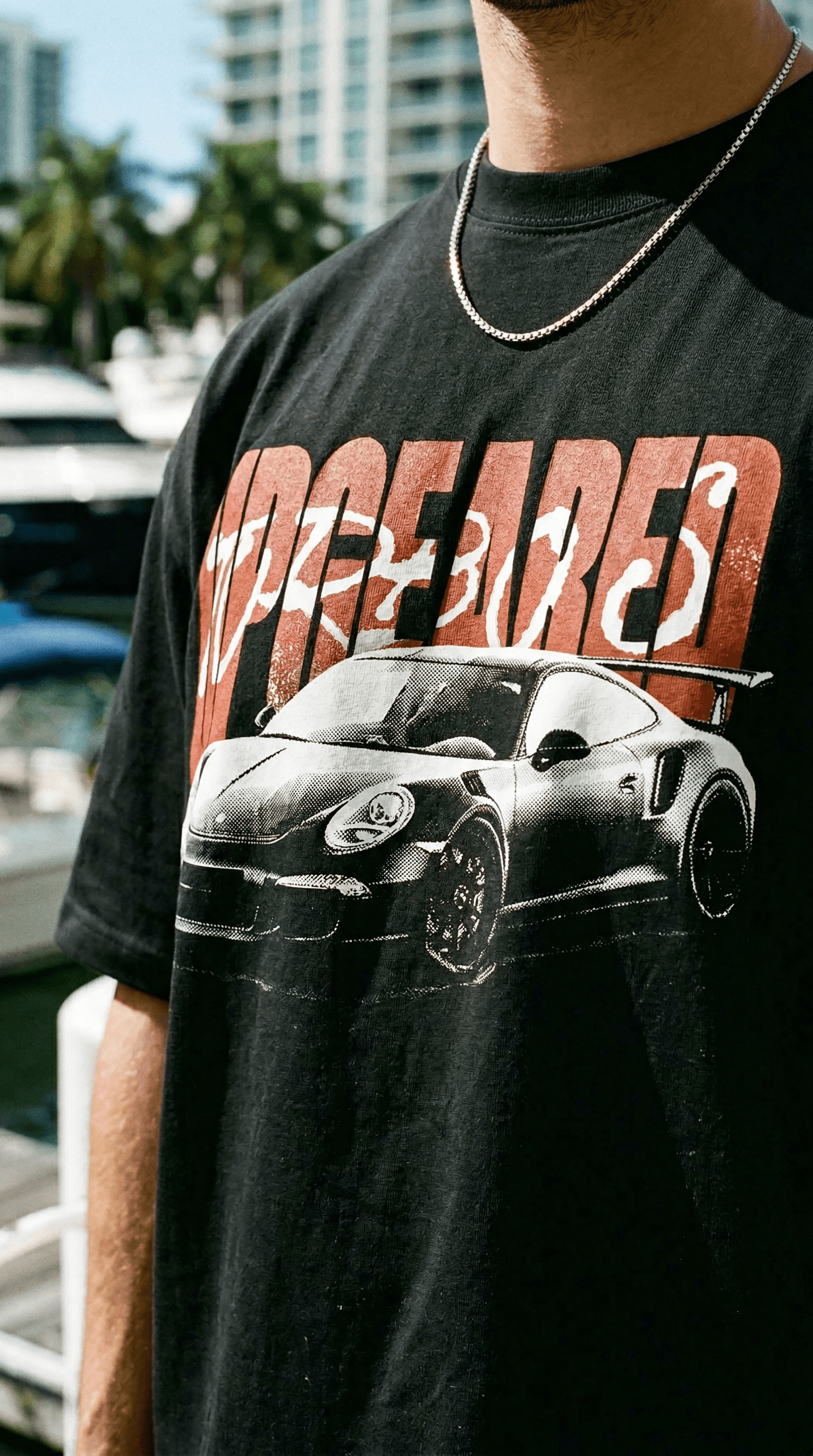
Porsche's turbocharged 911 earned the nickname "widowmaker" honestly. The original 930 Turbo, built from 1975 through the late 1980s, paired an engine with serious turbo lag against a rear-engine chassis that already put most of its weight behind the driver. That combination meant power could arrive suddenly, mid-corner, well after the driver had committed to a line, and if you lifted off the throttle at the wrong moment or got back into the boost incorrectly, the rear end could snap around with very little warning. It wasn't a myth built on rumor. Enough people found the limit of that car the hard way that the nickname stuck for good.
That reputation has followed the 911 Turbo through every generation since, even as the car underneath it changed almost completely. Every 911 Turbo since the mid-1990s has run all-wheel drive, and Porsche moved to sequential and eventually twin-turbo setups specifically to kill the lag that made the 930 so unpredictable. The modern 911 Turbo S is, by any real measure, one of the most controllable high-performance cars on sale, closer to a precision instrument than a wild animal. It launches with almost no drama, puts power down through all four wheels, and does it in weather conditions that would have parked a 930 in the garage.
The reputation never got the memo. That's the actual story of the modern Turbo S: a car engineered out of its own worst instinct decades ago, still carrying a nickname earned by a completely different generation of the same model line. It's still fast enough, and still rear-engined enough, that the outlaw mystique isn't pure nostalgia, there's a real mechanical lineage between the car that could kill you and the car that mathematically can't anymore. But the gap between "feels dangerous" and "is actually extremely controllable" is exactly where the Turbo S lives now, and it's a strange, interesting place for a car to sit.
That unresolved tension is why this car belongs in Underground instead of getting a cleaner, more polished treatment elsewhere. Underground isn't about presenting a car at its most refined. It's hand-painted, halftone, built like a zine put together by someone who still half-believes the widowmaker stories even while driving a car engineered specifically to disprove them. Vice would sell the Turbo S as an aspirational nighttime cruiser. Circuit would reduce it to a spec sheet and a lap time. Neither gets at the actual weirdness of a car whose legend and its reality stopped matching up a long time ago and never got reconciled.
The Turbo S doesn't need the widowmaker reputation to be respected. It's fast enough, capable enough, and rear-engined enough on its own terms. But the fact that the reputation still clings to a car engineered specifically to make it obsolete is the most interesting thing about this nameplate, and it's the whole reason the print exists uncut, unresolved, same as the story.
FAQ
Why is the 911 Turbo called the 'widowmaker'?
The nickname comes from the original 1975 930 Turbo, whose serious turbo lag combined with a rear-engine chassis meant power could arrive suddenly mid-corner, catching drivers off guard at the limit.
Is the modern 911 Turbo S still dangerous the way the 930 was?
No — every 911 Turbo since the mid-1990s runs all-wheel drive, and sequential/twin-turbo setups were adopted specifically to eliminate the lag that made the 930 unpredictable. The modern car is one of the most controllable high-performance machines on sale.
Why does the Turbo S nickname persist if the car changed?
The reputation was earned by a completely different generation of the same model line decades ago and never quite let go, even as the engineering that justified it was mostly solved.